1 USD = N/A1 EUR = N/A1 CNY = N/A
0

From the industrial world news

Latest industrial trends, technological innovations and professional advice

Reliable Supply for Hard-to-Find Components in Azerbaijan
08.04.2026

Reliable Supply for Hard-to-Find Components in Azerbaijan

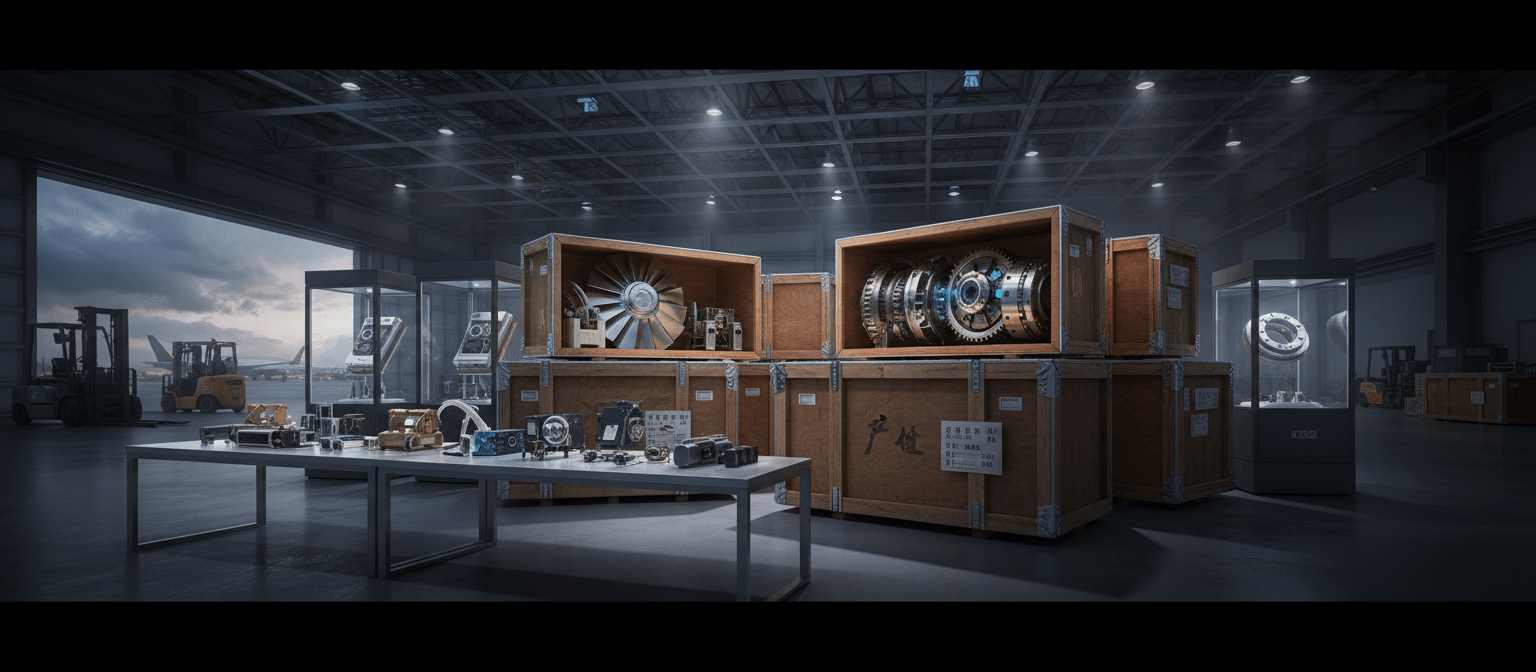
In engineering and industrial projects, a point is sometimes reached where standard catalog products no longer meet requirements. Finding rare electronic components for legacy system repairs or specific scientific research can become a real challenge. AGA-TEK fills this gap in the Azerbaijani market through its extensive international logistics network.Why Are Some Components Hard to Find?End of Life (EOL): Manufacturers frequently discontinue parts, yet factories and labs continue relying on older, stable hardware.Specialized Sectors: High-precision military, medical, and aerospace equipment requires strict, custom specifications not sold in standard retail stores.Global Logistics Barriers: Importing small-batch or discontinued parts safely requires verified international networks.Global Market Access with AGA-TEKWe don't just look for what's in our warehouse; we find what you actually need. Products falling under the "rare equipment" category are sourced operatively from the following directions:Europe & USA Markets: High-end industrial sensors, legacy PLC modules, and specialized laboratory devices.China & Asian Markets: Rare semiconductors, specific display modules, and OEM spare parts.Certified Stockists: Guaranteed and original product supply through our accredited global partners worldwide.

Read more
Comprehensive B2B Solutions for Energy, Technological Manufacturing, and Water Supply in Azerbaijan
08.04.2026

Comprehensive B2B Solutions for Energy, Technological Manufacturing, and Water Supply in Azerbaijan

If you have industrial equipment requirements, the AGA-TEK platform provides components such as PLCs, sensors, relays, pressure and temperature measuring devices, CNC machines, and pumps in a timely manner and at competitive prices. Utilizing local keywords such as "industrial equipment in Azerbaijan", "automation components Baku", and "industrial sensors sales" helps hit the right target, accelerating your procurement process.Every article written regarding specialized B2B solutions and complete supply models for your industry—whether it is energy, technological manufacturing, water supply, or other sectors—will provide practical guidance. You will focus on local SEO strategies, supplier selection, and technical specifications to easily find the correct equipment and optimize your project.Importance of Industrial Equipment and B2B SolutionsIndustrial equipment directly affects production sustainability, process quality, and cost optimization. You need: timely supply, matching technical specifications, and professional technical support.Role of Effective Production and Supply: Choosing the right equipment and proper integration are crucial for efficient production. Automation components like PLCs, sensors, and relays stabilize process control and accelerate fault detection. On-time delivery across the chain reduces inventory costs; for this, you must implement stock management and SLA agreements with suppliers.B2B Cooperation Models: The most beneficial models for you include supply chain collaboration, consignment inventory, and service agreements. Consignment inventory reduces your warehousing costs—components stay at the supplier's warehouse and are billed as used. Service agreements (preventive maintenance, spare parts, and emergency response) minimize failure risks and increase equipment operational lifespans.The Industrial Equipment Market in AzerbaijanThe market is primarily structured around a few major suppliers, capital-centric demand, and rapidly growing regional projects. Price, service, and spare parts availability play decisive roles when choosing equipment.Key Market Dynamics: Both local distributors and official representatives of European and Asian manufacturers operate in the Azerbaijani market. Through suppliers like AGA-TEK, you can source PLCs, sensors, relays, pumps, and generators.Baku vs. Regional Needs: Baku serves as the logistics and service center, offering the widest choices for CNC machines, industrial sensors sales, and complete automation packages. In regions, specific requirements for water supply, agriculture, and small manufacturing arise, where logistics distances require readily available local stock and flexible supplier support.AGA-TEK: Comprehensive Supply and ServicesAGA-TEK offers a wide product range and end-to-end services for industrial equipment, automation components, and industrial sensors. It provides a single point of supply to find required parts, verify technical compatibility, and manage logistics and customs processes.Product Catalog Advantages: The AGA-TEK catalog includes PLCs, sensors, relays, pressure/temperature meters, CNC control elements, drive systems, and industrial pumps. Products can be filtered by brand, technical characteristics, and compliance certificates.Value-Added Services: Combining logistics, customs clearance, technical support, and IT infrastructure services into a single package saves time and resources—especially for energy and water supply projects.Automation Components and Innovative SolutionsPLC Systems Implementation: Choose modular or compact PLCs based on project scale and I/O counts. Pay attention to programming languages (ladder, structured text, function block) and industrial protocols (Modbus, PROFINET, EtherNet/IP).Industrial Sensors and Readout: Select temperature, pressure, level, and flow sensors matching operational ranges and output signals (4–20 mA, 0–10 V, digital) with proper IP ratings (IP67 or higher) for harsh environments.Relays and Automated Control: Ensure proper nominal current, operating voltage, and contact lifespan metrics while incorporating protective modules against short circuits and surges.

Read more
Industrial Market Entry Strategy in Azerbaijan: Real Opportunities, Sectors, and B2B Growth Model
08.04.2026

Industrial Market Entry Strategy in Azerbaijan: Real Opportunities, Sectors, and B2B Growth Model

In recent years, Azerbaijan has transformed into a strategic hub for industry and logistics in the region. Government programs aimed at developing the non-oil sector, the creation of industrial parks, and the promotion of foreign investments make this market increasingly attractive.In this context, new opportunities arise for companies operating in the fields of industrial equipment, technological solutions, and B2B services. However, entering this market involves much more than simply importing products—it requires the right strategy, a deep understanding of the local market, and an appropriate sales model.Structure of the Azerbaijani Industrial MarketThe Azerbaijani industrial market is shaped around several key areas:Energy Sector: Still plays a leading role. Alongside the oil and gas industry, alternative energy projects have developed rapidly in recent years, boosting demand for generators, transformers, and power management systems.Construction and Infrastructure: Expanding rapidly. Heavy machinery, hydraulic systems, compressors, and concrete production equipment are widely utilized in major projects.Manufacturing Sector: Growing steadily. New factories are opening in food processing, plastics, textiles, and other fields, increasing demand for automation systems, production lines, and laboratory equipment.Most Promising Product CategoriesChoosing the right product is essential for entering the industrial market in Azerbaijan. The most promising directions for 2026 include:Industrial automation systems (PLC, SCADA, industrial software)Power equipment (diesel generators, transformers, UPS)Industrial compressors and air systemsPump systems and water management equipmentLaboratory and test equipmentElectrical components (switchgear, cable systems)Electronics and measuring devicesThese products experience high demand across both government projects and the private sector.

Read more
B2B Sales Strategy in the Industrial Sector: Modern Approaches, Product Focus, and an Effective Sales Model
08.04.2026

B2B Sales Strategy in the Industrial Sector: Modern Approaches, Product Focus, and an Effective Sales Model

Sales in the industrial sector differ completely from traditional retail or B2C sales models. Here, the decision-making process is longer, more complex, and heavily tied to technical factors. A customer is not merely purchasing a product—they are looking for solutions that minimize risk, maximize efficiency, and deliver long-term results.Therefore, a B2B sales strategy in the industrial sector must be built not only on sales techniques, but also on deep technical knowledge, market awareness, and a carefully structured product portfolio.Characteristics of Industrial B2B SalesIndustrial sales do not involve a single decision-maker. The process brings together engineers, technical specialists, the finance department, and executive management. For instance, choosing a compressor for a factory requires evaluating technical parameters (pressure, capacity), energy consumption, service availability, and price all at once. This extends the sales cycle but makes it much more structured and deliberate.Most Demanded Product CategoriesAn effective sales strategy begins with choosing the right product mix. Based on current market trends, the most searched and purchased items include:PLC Controllers: Systems like Siemens, Delta, and SchneiderSCADA Systems & Industrial Software: For plant automation and monitoringIndustrial Compressors: Screw compressors, air compressors, and oil-free variantsGenerators & Power Equipment: Diesel generators and UPS systemsElectrical Panels & Switchgear: Distribution and power management systemsSensors: Temperature, pressure, and proximity sensorsHydraulic & Pneumatic Equipment: For heavy machinery and assembly linesIndustrial Pumps: Water pumps, chemical pumps, and centrifugal pumpsLaboratory Devices: Spectrometers, analyzers, and testing equipmentElectronics & Soldering Tools: Soldering stations and PCB toolsThese products experience steady, high demand across both web searches and real-world industrial projects.

Read more
Service and Technical Support for Industrial Equipment: Why It Matters More Than the Initial Purchase
08.04.2026

Service and Technical Support for Industrial Equipment: Why It Matters More Than the Initial Purchase

Purchasing industrial equipment is merely the beginning of a project. The true value and primary risks emerge during the operational lifecycle. While many companies focus heavily on the procurement phase, they often relegate service and technical support to a secondary priority.However, in practice, the heaviest losses stem precisely from inadequate maintenance. A stalled production line, delayed repairs, or improper technical intervention create severe financial and reputational risks for enterprises. Therefore, technical support and service infrastructure must be planned as an integral component of any industrial project from day one.The Role of Service and Technical SupportService is not merely an emergency response to equipment failure; it is a comprehensive system designed to ensure continuous, optimal operation. A proper service approach extends equipment lifespan, maintains stable performance, and prevents unexpected breakdowns. In a B2B environment, this is critical because production downtime directly translates to revenue loss.

Read more
Logistics and Delivery Strategy: An Effective B2B Approach to Industrial Equipment Imports
08.04.2026

Logistics and Delivery Strategy: An Effective B2B Approach to Industrial Equipment Imports

In the supply chain of industrial equipment, logistics is not merely a transport service—it is a core strategic pillar that dictates project timelines, cost efficiency, and operational risk management. For B2B enterprises operating in Azerbaijan, importing heavy machinery, automation parts, or electronic components from global manufacturing hubs like China and Europe requires a rigorous and structured approach.The Strategic Role of Logistics in B2B ProjectsUnlike retail fulfillment, industrial logistics directly impacts production schedules and capital expenditure. A delayed shipment of a critical component, such as a PLC controller or a heavy industrial compressor, can stall an entire plant commissioning phase, leading to heavy financial losses. Effective logistics planning ensures predictable delivery windows, optimized freight budgets, and minimal customs friction.

Read more
Equipment ordering from China: step-by-step complete guide and B2B strategy
08.04.2026

Equipment ordering from China: step-by-step complete guide and B2B strategy

In recent years, China has risen to a dominant position in global industrial and technology supply. Today, as the world's largest manufacturing base, China offers a wide range of equipment and components across various fields.For companies operating in Azerbaijan, the Chinese market presents both great opportunities and serious risks. On one hand, there are low prices and a wide selection; on the other hand, quality differences, fake suppliers, and logistical difficulties exist.Therefore, ordering equipment from China is not a simple purchasing process. It is a complex process that requires a systematic approach, proper planning, and professional management.Structure of the Chinese marketThe Chinese market is multi-layered and structurally complex. Dozens, and sometimes hundreds, of suppliers exist here for the same product.Manufacturers can be divided into three main categories. The first category consists of real factories that produce the product themselves. The second category consists of trading companies that present the product as intermediaries. The third category includes informal and risky sellers.Understanding these differences is essential to making the right choice.

Read more
Most demanded industrial equipment in Azerbaijan (2026): market overview and B2B trends
08.04.2026

Most demanded industrial equipment in Azerbaijan (2026): market overview and B2B trends

Azerbaijan's industrial sector has entered a qualitatively new stage in recent years. As a result of the economic diversification policy implemented at the state level, the development of the non-oil sector, and the increase in foreign investments, the industrial infrastructure is being rapidly updated.These changes also increase the technological requirements of manufacturing enterprises. Companies no longer just want to produce, but want to switch to more efficient, faster, and higher-quality production models. This sharply increases the demand for modern industrial equipment.Looking at the market dynamics for 2026, it is clear that demand is not only growing — it is also becoming more complex and technology-oriented. This article analyzes the most demanded equipment categories in Azerbaijan and the main directions of the market.General structure of market demandThe demand for industrial equipment in Azerbaijan is formed based on several key factors. The development of the construction sector, the expansion of logistics and transport infrastructure, the increase in energy projects, and the modernization of manufacturing enterprises are at the forefront of these factors.At the same time, increasing requirements for compliance with international standards lead companies towards more accurate and high-quality equipment. This factor is of critical importance, especially for export-oriented enterprises.Digitalization and automation also have a serious impact on the market structure. Operations previously carried out manually are now being replaced by automated systems.Most demanded equipment categoriesIn 2026, several main equipment categories are experiencing particularly high demand in the industrial sector of Azerbaijan.Automation systems make up the core of the market. PLC controllers, SCADA systems, sensors, and industrial control devices are widely applied. Enterprises invest in these systems to optimize production processes and reduce the human factor.Power equipment is also among the categories in high demand. Transformers, distribution panels, UPS systems, and energy management technologies are widely used, especially in industrial and infrastructure projects.Hydraulic and pneumatic systems play a key role in the manufacturing and construction sectors. These systems are used for the transmission and control of mechanical power.Laboratory and measuring equipment have come to the fore more in recent years. The role of these devices for quality control, certification, and analysis processes is steadily increasing.The role of Chinese equipmentChinese-manufactured equipment is gaining a larger share in Azerbaijan's industrial market. The main reason for this is the provision of an optimal balance between price and performance.Chinese products are widely used, particularly in the fields of automation, energy, and mechanical systems. When chosen correctly, this equipment provides high efficiency and significantly reduces project costs.At the same time, accessing the Chinese market and choosing the right supplier requires a professional approach.The position of European equipmentEuropean-manufactured equipment still maintains a leading position in the premium segment. This equipment is distinguished by high accuracy, stability, and longevity.In oil and gas, pharmaceuticals, and high-risk industrial sectors, European equipment is more preferred.However, from a financial perspective, this equipment requires a higher investment.Main market trendsSeveral key trends are observed in the industrial equipment market in 2026.Automation and digitalization are no longer a choice, but are becoming a standard. Enterprises are shifting to real-time control and management systems.Energy efficiency is turning into a priority issue. Reducing energy consumption is important both financially and ecologically.Demand for integrated systems is growing. Combining different technologies into a single platform makes operations more effective.Main mistakes of companiesIn practice, many companies lack a strategic approach when choosing equipment.The biggest mistake is focusing solely on the initial price. This approach does not take long-term costs into account.Another mistake is failing to properly analyze the market. Decisions made without comparing alternatives are risky.The lack of technical expertise also leads to wrong choices.The AGA-TEK approachAGA-TEK applies an approach based on market analysis. Optimal solutions are provided taking into account the customer's requirements and budget.The company works with global suppliers, including China and Europe, and manages the entire supply process.This approach both minimizes risks and allows for achieving a more effective result.ConclusionThe industrial equipment market in Azerbaijan is developing rapidly and becoming more complex. To succeed in this market, companies must make strategic decisions, not just purchases.Proper analysis and the right partnership form the basis of this process.

Read more
Equipment selection for industrial projects: risks, strategic approach, and B2B decision model
08.04.2026

Equipment selection for industrial projects: risks, strategic approach, and B2B decision model

The success of industrial projects is determined not only by ideas and investment, but also by correct technical decisions. At the center of these decisions lies equipment selection. Whether it is a manufacturing plant, an energy project, or logistics infrastructure, the equipment used directly affects the project's efficiency, profitability, and sustainability.With the growth of industrial and infrastructure projects in Azerbaijan, this issue becomes even more relevant. However, in practice, many companies evaluate equipment selection as simple procurement. Yet, this process requires multi-layered analysis, risk assessment, and long-term planning.Incorrect equipment selection does not just result in additional costs. It can cause production downtime, project delays, and even the breach of contractual obligations. For this reason, equipment selection should be treated as a strategic decision rather than a technical one.The role of equipment selection in industrial projectsEquipment acts as the "technical skeleton" of a project. The selected technology and systems determine production capacity, product quality, and operating costs.For example, choosing equipment with low efficiency may look cheaper at the initial stage, but in the long-term perspective, it causes increased energy costs and frequent technical malfunctions.On the other hand, choosing excessively high-level and expensive equipment is not always optimal either. In this case, the return on investment period can be extended.The right approach is to make a balanced choice in accordance with the specific requirements of the project.Main risk categoriesEquipment selection in industrial projects covers several main risk groups.Technical risks are the most critical category. These risks include the equipment failing to provide the required performance, incompatibility with existing systems, or malfunctioning.Financial risks are related to investment and operating costs. A wrong choice leads to extra expenses and budget deviations.Logistics risks are related to delivery delays, customs problems, and supply chain disruptions.Operational risks arise during the operation of the equipment. This includes a lack of service, the unavailability of spare parts, and weak technical support.Technical selection strategyEquipment selection in industrial projects must be carried out in a phased manner. The first step is the precise definition of the technical requirements of the project.At this stage, production capacity, operating mode, environmental conditions, and integration requirements must be taken into account. Then, alternative technologies and manufacturers are compared.Technical selection should not be limited to specifications alone. The performance of the equipment in real operating conditions, usage experience, and service capabilities must also be evaluated.Supplier selection and strategic partnershipSupplier selection in industrial projects cannot be carried out simply by price comparison. The main factors here are reliability, technical competence, and long-term cooperation potential.A reliable supplier provides support at all stages of the project — from selection to installation and service. This leads to a significant reduction in risks.The strategic partnership model yields more effective results, especially in large projects.

Read more
Laboratory equipment: correct selection, technical requirements, and B2B supply strategy
08.04.2026

Laboratory equipment: correct selection, technical requirements, and B2B supply strategy

Laboratory equipment forms the core technological basis of modern industry, medicine, energy, ecology, and research sectors. These devices are not just tools used for measurement and analysis—they are critical instruments that shape the decision-making process.In recent years, the laboratory infrastructure in Azerbaijan has been developing significantly. Government projects, private sector investments, and industrial diversification are increasing the demand for laboratory equipment. Especially in the fields of oil and gas, food industry, pharmaceuticals, and construction materials, the role of precise analysis is growing stronger.However, unlike other industrial equipment, the selection of laboratory equipment requires higher precision, compliance with standards, and long-term stability. A wrongly chosen device can result not only in financial loss, but also in erroneous analysis results and, consequently, wrong strategic decisions.Main categories of laboratory equipmentLaboratory equipment is divided into several main groups according to its functional purpose, and each group requires a different technical approach.Analytical equipment forms the core of the laboratory. This category includes spectrometers, chromatographs, analyzers, and other high-precision measuring devices. These devices are used for chemical, physical, and biological analyses and require high calibration precision.Preparation and processing equipment is used to prepare samples for analysis. This includes centrifuges, mixers, drying ovens, and homogenizers. This equipment directly affects the accuracy of analysis results.Storage and environmental equipment ensures the stable maintenance of laboratory conditions. Refrigerators, freezers, incubators, and climatic chambers fall into this category.Additionally, measuring and calibration devices, safety systems, and laboratory furniture are an integral part of the overall infrastructure.Key criteria during technical selectionBecause laboratory equipment selection requires high precision and compliance, the technical approach is of special importance here.The most important factor is measurement accuracy. Even minimal deviations in analytical devices can affect the reliability of results. Therefore, the compliance of the devices with international standards must be checked.Another crucial factor is calibration capabilities. Periodic calibration of the devices must be possible, and technical support must be available for this process.The operating environment must also be taken into account during selection. Factors such as temperature, humidity, and vibration can affect device performance.Furthermore, software and interface compatibility are also important. Since modern laboratories already operate with digital systems, devices must have the ability to integrate with LIMS and other systems.International standards and certificatesCompliance with standards is a critical issue in laboratory equipment. The standards most widely used in this field are defined within the framework of ISO, IEC, and GLP (Good Laboratory Practice).Equipment used in medical and pharmaceutical fields must additionally possess FDA and CE certificates. These certificates confirm the safety and effectiveness of the device.In some cases, laboratory equipment imported into Azerbaijan may undergo additional checks regarding compliance with local AZS standards. This must be taken into account as an additional phase in the import process.Chinese and European laboratory equipmentEuropean and US manufacturers have held a dominant position in the laboratory equipment market for a long time. This equipment is known for high precision and stability.In recent years, Chinese-manufactured laboratory devices have developed rapidly. Particularly in the middle segment, Chinese equipment creates serious competition and in many cases offers an optimal price-quality balance.European manufacturing still holds the advantage in premium-level laboratory devices. However, Chinese manufacturers are strengthening their positions in this segment as well.

Read more
Chinese-manufactured industrial equipment: professional analysis of the quality and price balance
08.04.2026

Chinese-manufactured industrial equipment: professional analysis of the quality and price balance

One of the most fundamental changes occurring in the global industrial market over the past decades is the shift of manufacturing power to the East, particularly to China. If China was previously known only for cheap labor and low-priced goods, today the situation has fundamentally changed. China is no longer just a manufacturing country—it is a key player that creates technology, implements innovation, and shapes the global supply chain.For industrial and B2B companies operating in Azerbaijan, this change is of special importance. As an alternative to equipment that is not available locally or offered at high prices, the Chinese market is increasingly coming into focus. This requires making the right decision not only financially, but also strategically.When selecting Chinese-manufactured equipment, the main issue is not just price. The main issue is the proper assessment of quality, ensuring technical compliance, and effective risk management. This article aims to form a professional approach to Chinese equipment by covering precisely these three core aspects.Stages of development of Chinese manufacturingThe development of Chinese industrial manufacturing is not accidental and is the result of a long-term state strategy. To understand this development more clearly, it is important to analyze it in stages.In the first stage, China acted as a low-cost manufacturer in the global market. The main goal during this period was high-volume production and export. Quality standards were at a minimal level, and products were chosen mainly based on price. This approach led to the formation of certain stereotypes about Chinese products.In the second stage, Chinese manufacturers began cooperating with international companies. OEM manufacturing became widespread, technology transfer occurred, and production processes were modernized. At this stage, the quality of Chinese products increased significantly.At the present stage, China is a high-tech manufacturing country. Robotized factories, automated production lines, artificial intelligence, and data-driven management systems have become an integral part of Chinese industry. In many areas, Chinese companies act not only as manufacturers but also as innovators.The quality issue: What should the approach be?One of the most widespread misconceptions about Chinese equipment is that they all share the same quality. In reality, the Chinese market has a multi-level and complex structure.Different quality levels exist within the same product category, and these levels are mainly determined by price, components used, and production technology. Lower-segment products offer minimal functionality and are intended for short-term use. This type of product is more suitable for small projects or temporary solutions.Middle-segment products already meet industrial standards and have a wide application area. This equipment offers an optimal price-quality balance and is the most widely used category in the B2B market.The premium segment covers high-performance and long-lasting equipment that fully complies with international standards. In many cases, Chinese products in this category compete with European analogues.Therefore, the right approach is not a general assessment like "Chinese products are good or bad," but analyzing specific manufacturers and specific models.Main reasons for the price advantageThe price competitiveness of Chinese-manufactured equipment is the result of several fundamental factors. The most basic factor is mass production capabilities. Large-scale production reduces the cost per product, which directly affects the final price.Another important factor is state policy. The Chinese government has identified the industrial sector as a strategic priority and provided broad support to this area. Subsidies, tax exemptions, and infrastructure investments help reduce production costs.Additionally, a vast and integrated supply chain formed within China ensures the rapid and cheap acquisition of components. This makes the production process more flexible and effective.The logistics infrastructure also plays a special role. Chinese ports, railway networks, and air transport are optimized for global trade. This accelerates the export process and reduces overall costs.Comparison of Chinese and European equipmentPractical B2B projects show that choosing between Chinese and European equipment is not only a technical but also a strategic decision. European manufacturing usually offers long-term stability and high reliability. This equipment is used more in critical infrastructures and high-risk projects.Chinese manufacturing provides more flexible and economically efficient solutions. This equipment is particularly advantageous in large-scale projects, production lines, and optimization-oriented investments.The right approach is to evaluate these two directions not as alternatives, but as complementary strategies. Many companies apply a hybrid model, using European equipment for critical components and Chinese equipment for other parts.OEM and ODM manufacturing modelsOne of the biggest advantages of the Chinese market is the possibility of customizing production. The OEM model involves manufacturing under the customer's brand, creating broad opportunities for distributors.The ODM model is a more complex approach, covering all stages from product design to manufacturing. This model gives companies the opportunity to stand out in the market and offer unique products.These approaches create added value, especially for integrator companies like AGA-TEK, because it becomes possible to offer custom solutions to customers rather than standard products.

Read more
Industrial equipment selection in Azerbaijan: how to make the right decision?
08.04.2026

Industrial equipment selection in Azerbaijan: how to make the right decision?

In the modern business environment, selecting industrial equipment is not just a technical matter—it is a strategic decision. Correctly chosen equipment increases production efficiency, optimizes costs, and strengthens the business's competitiveness. Conversely, a wrong choice can lead to long-term financial losses, technical problems, and even project failure. In recent years, active development has been observed in the industrial, construction, logistics, and energy sectors in Azerbaijan. This further increases the importance of correct equipment selection.1. Proper definition of demand and purposeEquipment selection should always begin with these questions:What specific problem does this equipment solve?What will the intensity of use be (daily, continuous, seasonal)?Have the business's growth plans been taken into account? Many companies focus only on current needs at the initial stage. However, the right approach is to consider a 3–5 year perspective.2. Deep analysis of technical parametersThe following technical indicators play a key role when selecting equipment:Capacity and outputEnergy efficiencyOperating mode (continuous / intermittent)Level of automationCompatibility (integration with other systems) Failing to properly analyze technical compatibility leads to additional expenses in the future.3. Selection of the manufacturer and country of originThere are mainly 3 directions in the market:European manufacturingHigh qualityLongevityHigh priceChinese manufacturingOptimal price-quality balanceWide model selectionFast production and deliveryRegional manufacturing (Turkey, etc.)Moderate priceLocal complianceIn recent years, Chinese manufacturing has undergone a serious transformation and now offers high-tech products.

Read more
The 7 Most Important Factors When Choosing Laboratory Equipment
10.02.2026

The 7 Most Important Factors When Choosing Laboratory Equipment

The choice of laboratory equipment directly affects the quality of scientific research, industrial analyses, and production processes. Incorrectly selected equipment can reduce the accuracy of results and lead to time and financial losses. For this reason, it is important to consider several crucial factors when purchasing laboratory equipment. As Aga-tek, we supply reliable and certified equipment for laboratory and industrial fields. This article presents 7 key factors to consider when choosing laboratory equipment.

Read more