

In the global manufacturing and supply ecosystem, OEM and ODM models have evolved into some of the most widely utilized approaches within the B2B sector. Especially within the Chinese market, these models are deeply rooted, offering flexible frameworks for diverse commercial operations. While many companies recognize these acronyms as mere terminology, their real-world application and strategic divergence are often poorly understood. In reality, choosing between OEM and ODM directly dictates a company's market positioning, product lifecycle strategy, and long-term trajectory. This article explores the differences, core advantages, and contextual selection criteria for both models.
What is the OEM Model? The OEM (Original Equipment Manufacturer) model entails producing goods based on an established, existing design blueprint. In this arrangement, the manufacturer builds the completed product, and the client brands and markets it under their own proprietary name (often referred to as private labeling). This approach is highly advantageous for enterprises aiming for rapid market entry. Because the research, development, and tooling phases are already complete, the timeline is compressed, requiring focus primarily on packaging, compliance, and branding. While OEM minimizes upfront risk and accelerates time-to-market, customization options remain inherently restricted.
What is the ODM Model? The ODM (Original Design Manufacturer) model is a more comprehensive and collaborative arrangement. Under this paradigm, the product is engineered, designed, and customized from scratch or modified heavily from a base template according to the client’s exact technical specifications and aesthetic requirements. This approach empowers companies to differentiate themselves in competitive markets. The resulting product is unique in terms of functionality, design, and internal technology. Although ODM demands higher upfront capital investment and a longer development cycle, it yields superior long-term value and brand equity.
Key Differences: OEM vs. ODM
- Product Design: OEM utilizes pre-designed, ready-to-manufacture templates where alterations are limited to exterior branding. ODM involves bespoke product design, prototyping, and engineering customization.
- Risk and Speed: OEM offers faster deployment with lower initial financial exposure. ODM requires a longer development runway but delivers proprietary product differentiation.
- Control and Intellectual Property: OEM clients control the brand, while the manufacturer owns the design patent. ODM arrangements often involve shared or client-held design rights depending on the contractual framework.
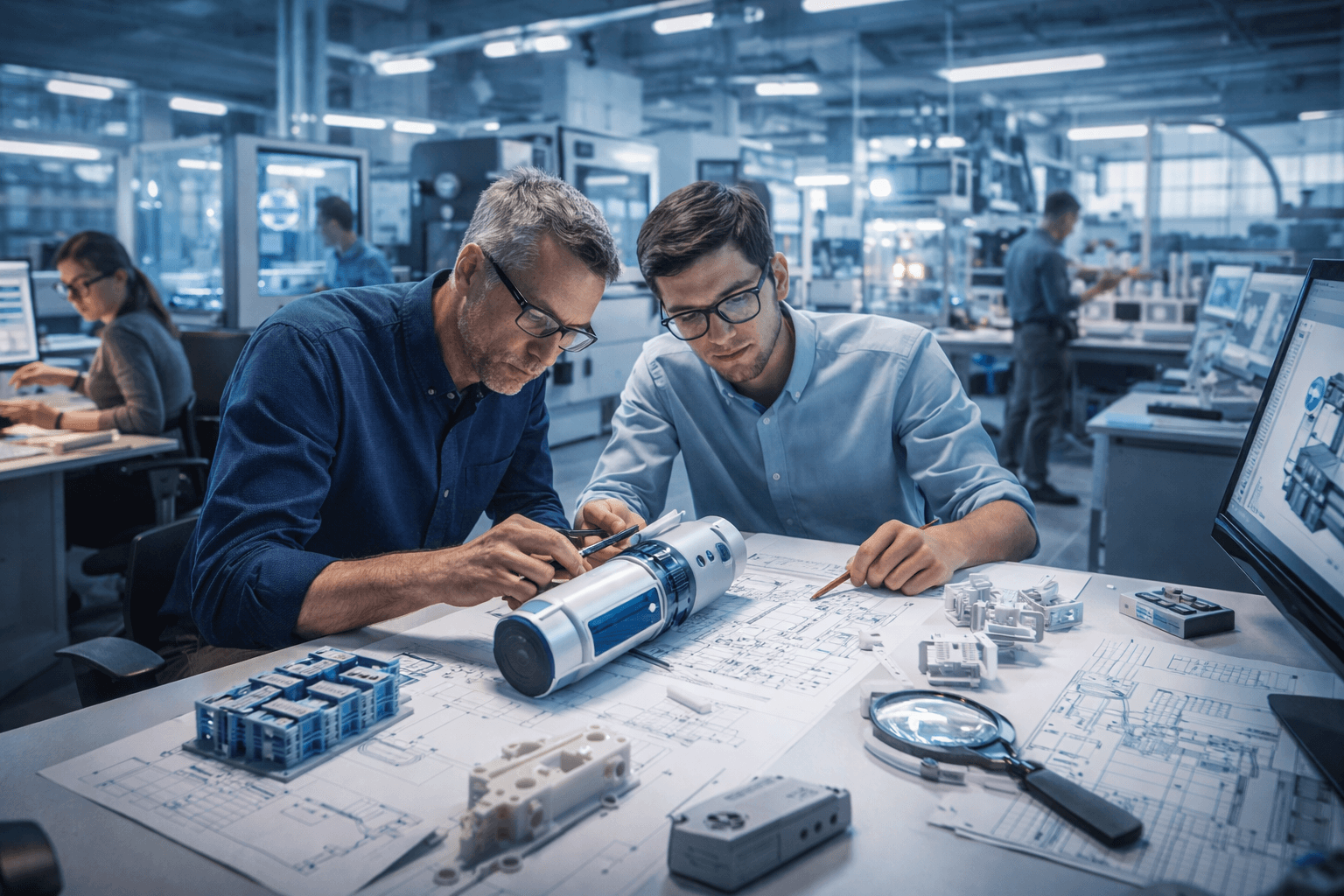
Which Model Should You Choose? The selection depends entirely on your enterprise goals:
- Choose OEM if your priority is rapid entry into the market, testing product demand with minimal financial risk, or selling standardized hardware/components.
- Choose ODM if your objective is to build a long-term proprietary brand, introduce unique features, and stand out from generic competitors.
Many mature industrial businesses begin with OEM to establish baseline market presence before transitioning into ODM for custom-engineered portfolios.
OEM and ODM in the Chinese Market China remains the undisputed global epicenter for OEM and ODM manufacturing. Thousands of specialized factories offer tiered levels of production flexibility and scaling. However, navigating this landscape requires rigorous quality auditing, specification enforcement, and reliable local coordination to protect product integrity.