1 USD = N/A ₽1 EUR = N/A ₽1 CNY = N/A ₽
0

From the industrial world news

Latest industrial trends, technological innovations and professional advice

Corporate Supply of Coilcraft Inductors and Other Passive Electronic Components
08.04.2026

Corporate Supply of Coilcraft Inductors and Other Passive Electronic Components

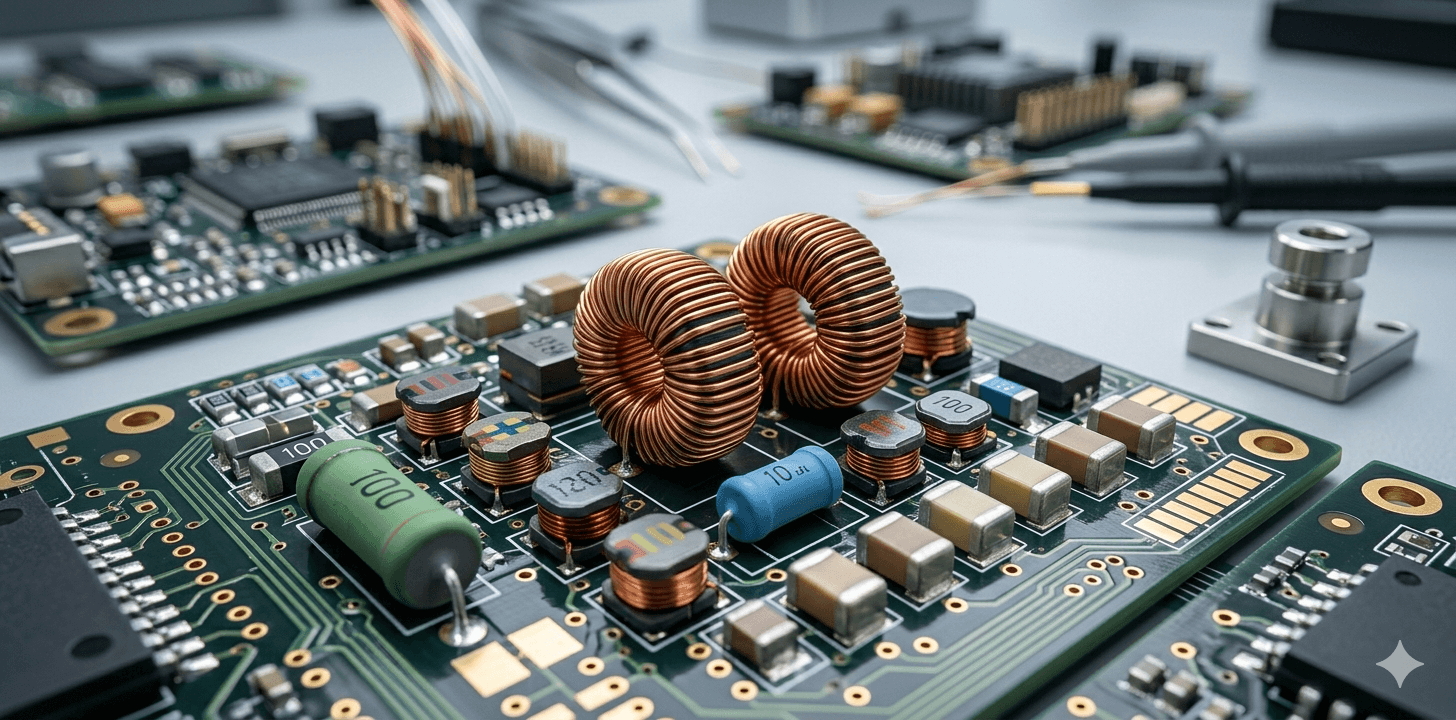
Coilcraft inductors are one of the most sought-after components for the Russian market for high-frequency signal handling and energy efficiency in modern electronics projects. Through aga-tek, you can purchase all passive components from the smallest 0201 series to the high-power 2520 series.Coilcraft's Extensive Product Portfolio Coilcraft inductors set the standard for modern telecommunications, automotive electronics, and industrial devices. The main series and component types we offer are:Power Inductors: The XFL, XGL, XEL, and LPS series, which belong to the shielded power inductor category, are distinguished by their low DCR (DC resistance) and high saturation current.Surface Mount (SMD) Solutions: For your SMC power inductor needs, components in sizes 0402, 0603, 0805, 1008, 1812, and 1210 are available in our warehouse or on express order.Filters and RF Components: Common mode choke models, as well as CMH, TRF, and PTRF series, are essential for removing interference (noise) in circuits.Special Applications: High temperature and vibration resistant MSS, SDS, SER, SPT, RA, MVR, and DMT series inductors.Technical Advantages: Why Coilcraft? Coilcraft products give engineers the edge in even the most challenging design situations. For example, the 1210CAN series is optimized for automotive networks (CAN bus). On the other hand, series such as LPD, MSD, and LPR provide excellent performance for transformer and coupled inductor applications.

Read more
Industrial Sensors and Level Measurement Systems
08.04.2026

Industrial Sensors and Level Measurement Systems

In modern production, professional equipment is needed to control the flow of liquids or measure the level in tanks. If you are looking for the most reliable solutions on the flowmeter sensor St. Petersburg market, the wide range of products offered by aga-tek will be the perfect choice for your project.Flow and Level Measurement Technologies Accurate measurement means proper resource management. We supply devices that meet global standards in this field:Electromagnetic Flowmeters: For measuring the flow of water and aggressive liquids, electromagnetic flowmeters (e.g. Kaifeng) and high-precision Digmesa 938-6300 sensors are among the most popular models.Level Sensors: We offer Endress+Hauser FMU42 ultrasonic sensor and Holykell level sensor technologies, which are highly appreciated by engineers, as a level sensor for monitoring liquid levels in tanks and wells. CNP level systems also prevent pumps from running dry.Force, Pressure and Linear Measurement Systems For industrial machinery to function properly, both impact/force and pressure parameters must be monitored:Force & Load Sensors: The world leader in force measurement, HBM Force Sensor, as well as Zemic H3, BM, and L6E load cells, are indispensable for scales and test systems.Pressure Sensors: We meet the pressure sensor needs in industrial pipelines with the SUPCON SUP-P300 and SUP-MP models.Linear Measurement: To ensure the accuracy of the machines, we supply Easson linear scale and GS series optical rulers.

Read more
Industrial Engines, Compressors and Pumps
08.04.2026

Industrial Engines, Compressors and Pumps

Industrial motors are one of the main needs in the Russian market to increase efficiency in industrial centers and production areas of Russia. Whether for energy efficiency or high torque-requiring tasks, aga-tek is your official B2B partner.High Pressure Air Solutions: Compressors We present the world's giants in the field of compressors, which are considered the "lungs" of pneumatic systems and industrial tools:Atlas Copco Series: The Atlas Copco GX4FF, XAHS 350, ZX 250 VSD, and GX11-13 models, distinguished by their reliability, are designed for both stationary and mobile applications.Screw-type systems: If you are searching for screw compressors in St. Petersburg, you can ensure clean and uninterrupted air flow in your plant with Jaguar screw compressors, Kaishan (KRSB, LG, KRSD), and Hanbell oil-free screw technologies.Additional components: Pneumatech PF 9S HE and CD 60+ dryers for air drying and filtration extend the life of the system.

Read more
Industrial Automation Sensors: Sensors for PLM, PLC and SCADA in Russia
08.04.2026

Industrial Automation Sensors: Sensors for PLM, PLC and SCADA in Russia

In the process of digitalization of modern factories and plants, industrial sensors are among the most demanded products in the Russian market. PLC sensors, used for both production line monitoring and data transmission to SCADA systems, are delivered to industrial enterprises promptly from our St. Petersburg office.The World's Leading Brands at One Address At aga-tek, we supply specific devices for various sectors of industry:Force and Weight Sensors: HBM Force Sensor and Zemic H3, Zemic BM series load cells, distinguished by their accuracy, are the ideal solution for heavy industrial scales.Level and Flow Measurement: Endress+Hauser FMU42 ultrasonic sensor and Kaifeng Electromagnetic flowmeter promise high accuracy in liquid and gas control. These devices are among the best choices for engineers looking for an effective industrial level sensor.Hydraulics and Pneumatics: Components such as Yuci Hydraulic Directional valve, AVS Römer EAV-211-A18, and Festo EG-12-25 are known for their durability to regulate flow in systems.Product Range and Technical Solutions Industrial automation doesn't just end with sensors. We also supply the following critical components:Control Valves: The SUPCON Control valve and Samson 3241 DN50 models set the standard for automatic flow control in industrial processes.Motion and Position Control: Encoder and LVDT (Linear Variable Differential Transformer) systems for precise movement of machine arms and motors.Switching: High-quality industrial relay ranges for safe control of electrical circuits.Specific Equipment: Yocy DS and other special hydraulic solutions.

Read more
Reliable Supply for Hard-to-Find Components in Russia
08.04.2026

Reliable Supply for Hard-to-Find Components in Russia

In engineering and industrial projects, a point is sometimes reached where standard catalog products no longer meet requirements. Finding rare electronic components for legacy system repairs or specific scientific research can become a real challenge. aga-tek fills this gap in the Russian market through its extensive international logistics network.Why Are Some Components Hard to Find?End of Life (EOL): Manufacturers frequently discontinue parts, yet factories and labs continue relying on older, stable hardware.Specialized Sectors: High-precision military, medical, and aerospace equipment requires strict, custom specifications not sold in standard retail stores.Global Logistics Barriers: Importing small-batch or discontinued parts safely requires verified international networks.Global Market Access with aga-tek We don't just look for what's in our warehouse; we find what you actually need. Products falling under the "rare equipment" category are sourced operatively from the following directions:Europe & USA Markets: High-end industrial sensors, legacy PLC modules, and specialized laboratory devices.China & Asian Markets: Rare semiconductors, specific display modules, and OEM spare parts.Certified Stockists: Guaranteed and original product supply through our accredited global partners worldwide.

Read more
Electrocomponents: Russia B2B Sales for Microchips, Sensors, and Processors
08.04.2026

Electrocomponents: Russia B2B Sales for Microchips, Sensors, and Processors

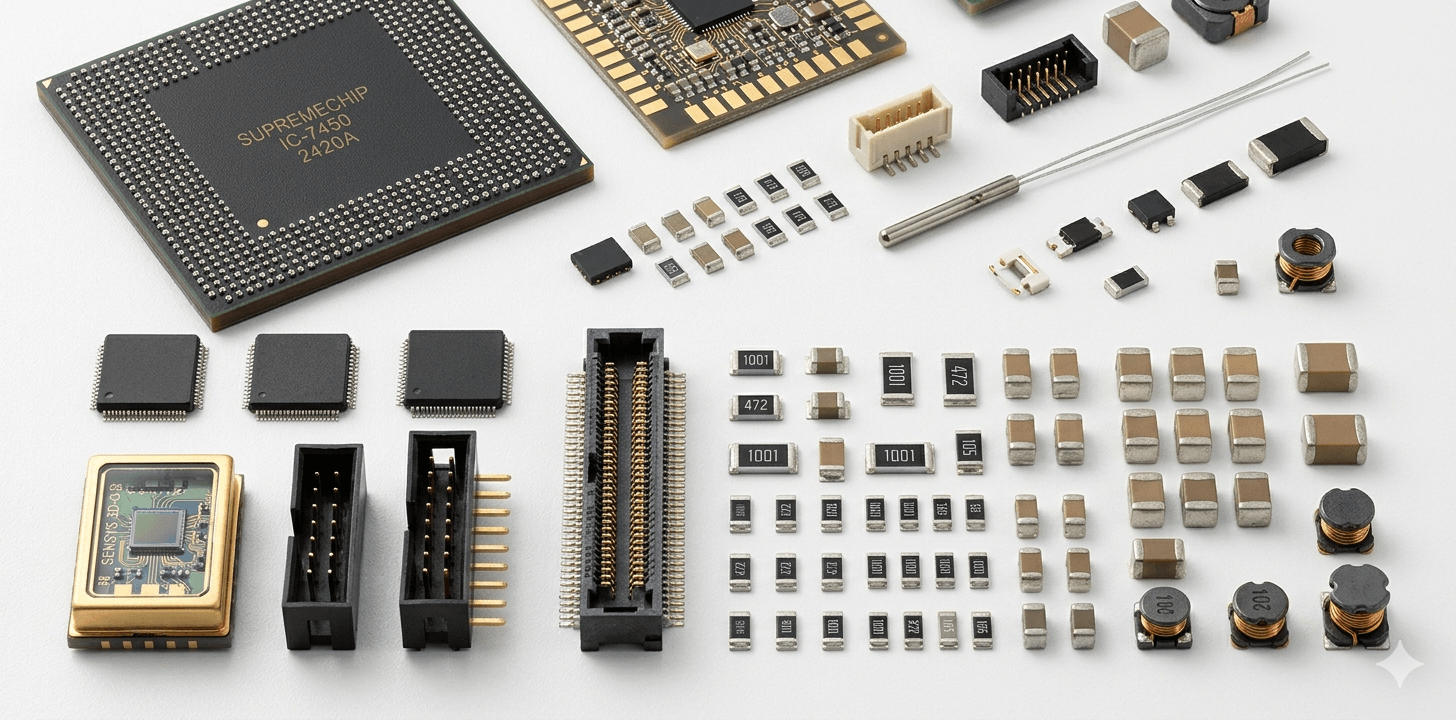
In the modern world, the speed of technological innovation directly depends on the quality of the components used. Whether it is a small IoT (Internet of Things) device or a massive industrial automation system, the success of any project relies on a reliable supply chain. As aga-tek, we bridge this gap in Russia’s technology market by providing professional electrocomponent sales.Russia's Electrocomponent Market and the aga-tek Advantage With the growth of local production and engineering solutions in Russia, electrocomponent sales have become a strategic sector. One of the biggest challenges for enterprises is acquiring original products quickly and on favorable terms. Through the aga-tek platform, we offer our B2B customers official components from global brands.Wide Product Assortment: From Microchips to Sensors Finding all project-required parts in a single location saves both time and budget. The main categories offered by aga-tek include:Microchips and Processors: Microcontrollers and IC chips ensuring computational power. Professional microchip supply in Saint Petersburg is carried out in compliance with industrial standards.Sensors and Interfaces: Make your systems "perceptive" with temperature, humidity, pressure, and motion sensors.Reliable Power - AC/DC Converters: High-efficiency converters for energy stabilization.Connectors and Switches: All types of connector solutions for reliable connectivity.Surface Mount (SMD) Components: Integral parts of modern electronic boards, surface mount components from Chinese manufacturing and European brands are available in our warehouse.

Read more
Comprehensive B2B Solutions for Energy, Technological Manufacturing, and Water Supply in Russia
08.04.2026

Comprehensive B2B Solutions for Energy, Technological Manufacturing, and Water Supply in Russia

If you have industrial equipment requirements, the aga-tek platform provides components such as PLCs, sensors, relays, pressure and temperature measuring devices, CNC machines, and pumps in a timely manner and at competitive prices. Utilizing local keywords such as "industrial equipment in Russia", "automation components St. Petersburg", and "industrial sensors sales" helps hit the right target, accelerating your procurement process. Every article written regarding specialized B2B solutions and complete supply models for your industry—whether it is energy, technological manufacturing, water supply, or other sectors—will provide practical guidance. You will focus on local SEO strategies, supplier selection, and technical specifications to easily find the correct equipment and optimize your project.Importance of Industrial Equipment and B2B Solutions Industrial equipment directly affects production sustainability, process quality, and cost optimization. You need: timely supply, matching technical specifications, and professional technical support.Role of Effective Production and Supply: Choosing the right equipment and proper integration are crucial for efficient production. Automation components like PLCs, sensors, and relays stabilize process control and accelerate fault detection. On-time delivery across the chain reduces inventory costs; for this, you must implement stock management and SLA agreements with suppliers.B2B Cooperation Models: The most beneficial models for you include supply chain collaboration, consignment inventory, and service agreements. Consignment inventory reduces your warehousing costs—components stay at the supplier's warehouse and are billed as used. Service agreements (preventive maintenance, spare parts, and emergency response) minimize failure risks and increase equipment operational lifespans.The Industrial Equipment Market in Russia The market is primarily structured around a few major suppliers, capital-centric demand, and rapidly growing regional projects. Price, service, and spare parts availability play decisive roles when choosing equipment.Key Market Dynamics: Both local distributors and official representatives of European and Asian manufacturers operate in the Russian market. Through suppliers like aga-tek, you can source PLCs, sensors, relays, pumps, and generators.St. Petersburg vs. Regional Needs: St. Petersburg serves as the logistics and service center, offering the widest choices for CNC machines, industrial sensors sales, and complete automation packages. In regions, specific requirements for water supply, agriculture, and small manufacturing arise, where logistics distances require readily available local stock and flexible supplier support.aga-tek: Comprehensive Supply and Services aga-tek offers a wide product range and end-to-end services for industrial equipment, automation components, and industrial sensors. It provides a single point of supply to find required parts, verify technical compatibility, and manage logistics and customs processes.Product Catalog Advantages: The aga-tek catalog includes PLCs, sensors, relays, pressure/temperature meters, CNC control elements, drive systems, and industrial pumps. Products can be filtered by brand, technical characteristics, and compliance certificates.Value-Added Services: Combining logistics, customs clearance, technical support, and IT infrastructure services into a single package saves time and resources—especially for energy and water supply projects.Automation Components and Innovative SolutionsPLC Systems Implementation: Choose modular or compact PLCs based on project scale and I/O counts. Pay attention to programming languages (ladder, structured text, function block) and industrial protocols (Modbus, PROFINET, EtherNet/IP).Industrial Sensors and Readout: Select temperature, pressure, level, and flow sensors matching operational ranges and output signals (4–20 mA, 0–10 V, digital) with proper IP ratings (IP67 or higher) for harsh environments.Relays and Automated Control: Ensure proper nominal current, operating voltage, and contact lifespan metrics while incorporating protective modules against short circuits and surges.

Read more
Microchips Market & B2B Supply in Russia
08.04.2026

Microchips Market & B2B Supply in Russia

Microchips directly affect your project's performance and supply security. Through aga-tek (and the platform aga-tek.ru), you can mitigate risks by sourcing original IC, SMT, and BGA components from top-level brands. You can procure microcontrollers, ADC/DACs, memory, and sensor interface chips tailored to your requirements, backed by industrial standards and technical support.The Essential Role and Types of Microchips Microchips provide computing, signal processing, memory, and sensor connectivity in modern devices. They are divided into specialized chips for distinct functions, where performance, power consumption, SMD/SIP packaging, and industrial certificates directly influence project success.Microcontrollers (MCU) and Microprocessors (MPU): ARM Cortex-M series MCUs are optimal for real-time and rich I/O (GPIO, ADC, UART, SPI, I2C) needs, whereas ARM Cortex-A or x86-based MPU units suit complex operating systems and high-computation multi-core demands.ADC/DAC Converters & Memory Chips: Essential for bridging analog signals to digital and vice versa. Memory chips (NAND, NOR, SRAM, DRAM, EEPROM, Flash) are selected based on specific data retention and speed requirements.Sensor Interface Chips: Combine ADCs, multiplexers, signal conditioners, and specialized protocols (I2C, SPI, 1-Wire) to seamlessly link temperature, humidity, pressure, and motion sensors to your system.

Read more
What is a Microchip and Why is It Used?
08.04.2026

What is a Microchip and Why is It Used?

It is impossible to imagine today’s technological world without microchips. Found everywhere from smartphones to industrial robots, these components are considered the "brain" of modern electronics. But what is a microchip and why is it so important? In this article, we explore the types of microchips and supply opportunities in the Russian market.What is a Microchip? A microchip (or IC chip) is a collection of electronic circuits placed on a tiny board made of semiconductor material (usually silicon). A single microchip can integrate millions of transistors, resistors, and capacitors. This compactness allows devices to become smaller while operating much faster.Main Types and Applications of Microchips Various types of microchips exist to perform different functions:Microcontrollers and Microprocessors: The core control units executing device software, widely used from automotive systems to home appliances.Analog and Digital Microchips: Analog microchips process continuous signals like sound and temperature, whereas digital microchips operate on computer logic ($0$ and $1$).ADC/DAC Microchips: Convert analog signals to digital (and vice versa), enabling communication between different systems.Sensor Interface and Gate Driver: Used in industrial applications to read sensor data and drive high-power motors using specialized gate driver microchip models.Industrial Microchips and B2B Supply Components used in industrial environments require higher durability than consumer electronics, demanding resistance to extreme temperatures and vibrations. Therefore, finding a reliable partner for B2B microchip sales is critical for enterprises. Securing original products in the electronic component supply chain guarantees the longevity of projects and prevents production line downtime.Where to Buy Microchips in Russia? If you are looking for an answer to "where to buy microchips in Russia", turning to specialized local suppliers is the right choice. Professional microchip supply involves not just sales, but engineering support for correct component selection. Through trusted B2B platforms like aga-tek in St. Petersburg, you can bring complex projects to life with original components and microcontrollers.

Read more
ROI and Investment Analysis in Industrial Projects: A Financial Model for Informed Decision-Making
08.04.2026

ROI and Investment Analysis in Industrial Projects: A Financial Model for Informed Decision-Making

One of the most critical questions in industrial projects is: "How much will this investment yield?" Answering this question requires looking far beyond just the initial costs. In the modern business environment, decisions are made based on ROI (Return on Investment).Many companies focus solely on price when choosing equipment. However, actually, more expensive yet effective equipment can bring higher returns in the long run. Therefore, financial analysis is just as important as technical selection in industrial projects.What is ROI and How Does It Work?ROI is the main indicator measuring the effectiveness of an investment. It is simply calculated as:ROI = (Revenue – Cost) / CostThis indicator demonstrates how efficient an investment is. In industrial projects, ROI is not measured solely by sales revenue. It also includes reduced costs, increased productivity, and minimized risks.

Read more
Industrial Market Entry Strategy in Russia: Real Opportunities, Sectors, and B2B Growth Model
08.04.2026

Industrial Market Entry Strategy in Russia: Real Opportunities, Sectors, and B2B Growth Model

In recent years, Russia has transformed into a strategic hub for industry and logistics in the region. Government programs aimed at developing the non-oil sector, the creation of industrial parks, and the promotion of foreign investments make this market increasingly attractive. In this context, new opportunities arise for companies operating in the fields of industrial equipment, technological solutions, and B2B services. However, entering this market involves much more than simply importing products—it requires the right strategy, a deep understanding of the local market, and an appropriate sales model.Structure of the Russian Industrial Market The Russian industrial market is shaped around several key areas:Energy Sector: Still plays a leading role. Alongside the oil and gas industry, alternative energy projects have developed rapidly in recent years, boosting demand for generators, transformers, and power management systems.Construction and Infrastructure: Expanding rapidly. Heavy machinery, hydraulic systems, compressors, and concrete production equipment are widely utilized in major projects.Manufacturing Sector: Growing steadily. New factories are opening in food processing, plastics, textiles, and other fields, increasing demand for automation systems, production lines, and laboratory equipment.

Read more
B2B Sales Strategy in the Industrial Sector: Modern Approaches, Product Focus, and an Effective Sales Model
08.04.2026

B2B Sales Strategy in the Industrial Sector: Modern Approaches, Product Focus, and an Effective Sales Model

Sales in the industrial sector differ completely from traditional retail or B2C sales models. Here, the decision-making process is longer, more complex, and heavily tied to technical factors. A customer is not merely purchasing a product—they are looking for solutions that minimize risk, maximize efficiency, and deliver long-term results. Therefore, a B2B sales strategy in the industrial sector must be built not only on sales techniques, but also on deep technical knowledge, market awareness, and a carefully structured product portfolio.Characteristics of Industrial B2B Sales Industrial sales do not involve a single decision-maker. The process brings together engineers, technical specialists, the finance department, and executive management. For instance, choosing a compressor for a factory requires evaluating technical parameters (pressure, capacity), energy consumption, service availability, and price all at once. This extends the sales cycle but makes it much more structured and deliberate.Most Demanded Product Categories An effective sales strategy begins with choosing the right product mix. Based on current market trends, the most searched and purchased items include:PLC Controllers: Systems like Siemens, Delta, and SchneiderSCADA Systems & Industrial Software: For plant automation and monitoringIndustrial Compressors: Screw compressors, air compressors, and oil-free variantsGenerators & Power Equipment: Diesel generators and UPS systemsElectrical Panels & Switchgear: Distribution and power management systemsSensors: Temperature, pressure, and proximity sensorsHydraulic & Pneumatic Equipment: For heavy machinery and assembly linesIndustrial Pumps: Water pumps, chemical pumps, and centrifugal pumpsLaboratory Devices: Spectrometers, analyzers, and testing equipmentElectronics & Soldering Tools: Soldering stations and PCB toolsThese products experience steady, high demand across both web searches and real-world industrial projects.

Read more
Service and Technical Support for Industrial Equipment: Why It Matters More Than the Initial Purchase
08.04.2026

Service and Technical Support for Industrial Equipment: Why It Matters More Than the Initial Purchase

Purchasing industrial equipment is merely the beginning of a project. The true value and primary risks emerge during the operational lifecycle. While many companies focus heavily on the procurement phase, they often relegate service and technical support to a secondary priority. However, in practice, the heaviest losses stem precisely from inadequate maintenance. A stalled production line, delayed repairs, or improper technical intervention create severe financial and reputational risks for enterprises. Therefore, technical support and service infrastructure must be planned as an integral component of any industrial project from day one.The Role of Service and Technical Support Service is not merely an emergency response to equipment failure; it is a comprehensive system designed to ensure continuous, optimal operation. A proper service approach extends equipment lifespan, maintains stable performance, and prevents unexpected breakdowns. In a B2B environment, this is critical because production downtime directly translates to revenue loss.

Read more
What is a System Integrator and Why Do They Play a Critical Role for Modern Businesses?
08.04.2026

What is a System Integrator and Why Do They Play a Critical Role for Modern Businesses?

The modern business environment is no longer limited to simple product purchases. Companies require various technologies, systems, and equipment to work together seamlessly. This brings a critical approach to the forefront—system integration. A system integrator is much more than just a product-selling company. They are a strategic partner that transforms disparate technologies into a single, functional system and maximizes business efficiency. With the growth of industrial and technological projects in Russia, the demand for system integrators is rising rapidly.What is a System Integrator? A system integrator is a company that combines various components—hardware, software, and technological solutions—into a cohesive, unified system. This process involves far more than just physical technical connections. The core objective is to ensure that all subsystems operate with high coordination and maximum efficiency. For example, in a manufacturing plant, machinery, sensors, control systems, and management software must all communicate flawlessly with one another.

Read more
Logistics and Delivery Strategy: An Effective B2B Approach to Industrial Equipment Imports
08.04.2026

Logistics and Delivery Strategy: An Effective B2B Approach to Industrial Equipment Imports

In the supply chain of industrial equipment, logistics is not merely a transport service—it is a core strategic pillar that dictates project timelines, cost efficiency, and operational risk management. For B2B enterprises operating in Russia, importing heavy machinery, automation parts, or electronic components from global manufacturing hubs like China and Europe requires a rigorous and structured approach.The Strategic Role of Logistics in B2B Projects Unlike retail fulfillment, industrial logistics directly impacts production schedules and capital expenditure. A delayed shipment of a critical component, such as a PLC controller or a heavy industrial compressor, can stall an entire plant commissioning phase, leading to heavy financial losses. Effective logistics planning ensures predictable delivery windows, optimized freight budgets, and minimal customs friction.

Read more
Accessing the China Domestic Market: Why It Is a Strategic Advantage for B2B
08.04.2026

Accessing the China Domestic Market: Why It Is a Strategic Advantage for B2B

When discussing China, most companies focus exclusively on the export-oriented market. However, the real advantage is often hidden not on the open global market, but deep within China’s domestic ecosystem. Because this market is larger, more flexible, and intensely competitive, pricing structures and operational opportunities differ radically. Many companies operating in Russia rely solely on international platforms when sourcing from China. This automatically subjects them to inflated pricing and restricted product selections. This article explores why accessing the China domestic market serves as a vital strategic edge and how it transforms industrial business operations.What is the China Domestic Market? The China domestic market is the self-contained ecosystem where native manufacturers, suppliers, and distributors trade primarily for local consumption. Built largely for internal enterprise needs, this market rarely appears on mainstream international B2B platforms. Pricing here is significantly lower because international marketing overheads, export agency fees, and western-facing platform commissions are absent. Furthermore, product varieties are broader, and local manufacturers demonstrate a higher degree of production flexibility. This environment represents the "real China" marketplace, housing the most competitive offers available.International Market vs. Domestic Market Products listed on international export platforms are typically pre-filtered, optimized for foreign compliance, and marked up to include distributor margins and intermediary layers. Conversely, the domestic ecosystem allows businesses to interface much closer to the source. The primary differences lie in the minimization of intermediaries and the establishment of agile, direct cooperation models.Price Advantage One of the most immediate benefits of tapping into China’s domestic market is cost efficiency. Identical industrial components, raw materials, or hardware can be 20–40% cheaper domestically. For large-scale industrial orders, this price variance translates into massive capital savings.Product Variety and Customization The domestic sphere offers a much wider catalog of specialized items. Many Chinese factories produce specialized lines exclusively for local consumption that are never advertised abroad. Additionally, custom manufacturing (OEM/ODM) is far more flexible; domestic producers are often willing to accommodate smaller pilot batches or specialized technical modifications compared to export-heavy giants.Core Challenges Working directly with China’s domestic market introduces notable friction:Language and cultural barriersComplex local legal and payment frameworksDifficulties in vetting factory credibility and conducting quality control remotelyHow to Access This Market Navigating this landscape requires targeted strategies. Leveraging direct local partnerships or working alongside specialized technical integrators who maintain active, on-the-ground presence in China represents the most reliable execution path.The aga-tek Approach aga-tek establishes direct pipelines into China’s domestic manufacturing networks. By managing local supplier vetting, quality auditing, and direct sourcing, aga-tek secures optimal pricing and broader technical choices for its clients.

Read more
OEM and ODM Manufacturing: Differences, Advantages, and the Right Selection Strategy for Business
08.04.2026

OEM and ODM Manufacturing: Differences, Advantages, and the Right Selection Strategy for Business

In the global manufacturing and supply ecosystem, OEM and ODM models have evolved into some of the most widely utilized approaches within the B2B sector. Especially within the Chinese market, these models are deeply rooted, offering flexible frameworks for diverse commercial operations. While many companies recognize these acronyms as mere terminology, their real-world application and strategic divergence are often poorly understood. In reality, choosing between OEM and ODM directly dictates a company's market positioning, product lifecycle strategy, and long-term trajectory. This article explores the differences, core advantages, and contextual selection criteria for both models.What is the OEM Model? The OEM (Original Equipment Manufacturer) model entails producing goods based on an established, existing design blueprint. In this arrangement, the manufacturer builds the completed product, and the client brands and markets it under their own proprietary name (often referred to as private labeling). This approach is highly advantageous for enterprises aiming for rapid market entry. Because the research, development, and tooling phases are already complete, the timeline is compressed, requiring focus primarily on packaging, compliance, and branding. While OEM minimizes upfront risk and accelerates time-to-market, customization options remain inherently restricted.What is the ODM Model? The ODM (Original Design Manufacturer) model is a more comprehensive and collaborative arrangement. Under this paradigm, the product is engineered, designed, and customized from scratch or modified heavily from a base template according to the client’s exact technical specifications and aesthetic requirements. This approach empowers companies to differentiate themselves in competitive markets. The resulting product is unique in terms of functionality, design, and internal technology. Although ODM demands higher upfront capital investment and a longer development cycle, it yields superior long-term value and brand equity.Key Differences: OEM vs. ODMProduct Design: OEM utilizes pre-designed, ready-to-manufacture templates where alterations are limited to exterior branding. ODM involves bespoke product design, prototyping, and engineering customization.Risk and Speed: OEM offers faster deployment with lower initial financial exposure. ODM requires a longer development runway but delivers proprietary product differentiation.Control and Intellectual Property: OEM clients control the brand, while the manufacturer owns the design patent. ODM arrangements often involve shared or client-held design rights depending on the contractual framework.

Read more
How to Find and Verify Chinese Suppliers: Risks, Methods, and a Practical B2B Approach
08.04.2026

How to Find and Verify Chinese Suppliers: Risks, Methods, and a Practical B2B Approach

The Chinese market is the world's largest sourcing hub for industrial equipment and components. However, its primary challenge lies in its sheer size and structural complexity. There are hundreds of suppliers for any given product, with drastic variations in quality, reliability, and professionalism. In practice, the greatest risk for a business is choosing the wrong supplier. Such an error leads to substandard products, severe delivery delays, and significant financial losses. This article outlines the professional methods used to successfully find and thoroughly verify Chinese suppliers.Types of Suppliers in the Chinese Market Not all sellers in China operate under the same business model, and distinguishing between them is critical:Real Manufacturers (Factories): They produce the goods themselves and possess actual technical capabilities. Working with them provides the highest stability and quality control.Trading Companies: These act as intermediaries, aggregating products from various manufacturers. While they offer flexibility and lower minimum order quantities (MOQs), they introduce an extra layer of risk and cost.Agents and Unofficial Sellers: The riskiest category. They often operate without transparency, posing severe risks to long-term B2B partnerships.Sourcing Channels There are several avenues for finding Chinese suppliers:Online Platforms (e.g., Alibaba, Made-in-China) provide a broad initial selection, but the data presented is not always 100% reliable.Exhibitions and Business Forums are highly effective for establishing trustworthy, face-to-face relationships.Direct Factory Contact via Local Representatives provides the highest level of security and reliability.Supplier Verification Stages Selecting a reliable partner requires a systematic vetting process:Legal Status and Registration: Verifying the company's business license ensures they are a legitimate, operational entity.Certificates and Standards: Checking for ISO, CE, and other relevant compliance certificates confirms their quality baseline.References and Track Record: Gathering information on previous clients and reference projects is vital.The Importance of Factory Audits Conducting an on-site factory audit is one of the most effective ways to assess a supplier's true capabilities. An audit evaluates the production workflow, quality control (QC) systems, and workforce conditions, verifying whether the supplier's claims match reality.Samples and Testing Ordering a sample is a crucial risk-mitigation step. The product must be tested under real-world conditions to confirm technical compliance before any bulk orders are placed.Red Flags to Watch Out For Be alert to warning signs during the selection process:Unrealistically low pricesVague or evasive communicationMissing or fabricated documentationHigh-pressure sales tactics to rush a depositContracts and Legal Protection Contracts must be drafted with meticulous detail. Quality standards, delivery timelines, penalty clauses, and payment terms should be explicitly defined to ensure legal leverage.The aga-tek Approach aga-tek implements a multi-tiered system for supplier selection. The entire process—encompassing background verification, on-site audits, and technical analysis—is managed under a unified structure. This methodology guarantees clients maximum reliability and minimum risk.Conclusion Success in the Chinese market hinges entirely on selecting the right supplier. This process demands a professional, systematic, and rigorous approach.

Read more
Industrial equipment selection in Russia: how to make the right decision?
08.04.2026

Industrial equipment selection in Russia: how to make the right decision?

In the modern business environment, selecting industrial equipment is not just a technical matter—it is a strategic decision. Correctly chosen equipment increases production efficiency, optimizes costs, and strengthens the business's competitiveness. Conversely, a wrong choice can lead to long-term financial losses, technical problems, and even project failure. In recent years, active development has been observed in the industrial, construction, logistics, and energy sectors in Russia. This further increases the importance of correct equipment selection.1. Proper definition of demand and purposeEquipment selection should always begin with these questions:What specific problem does this equipment solve?What will the intensity of use be (daily, continuous, seasonal)?Have the business's growth plans been taken into account? Many companies focus only on current needs at the initial stage. However, the right approach is to consider a 3–5 year perspective.2. Deep analysis of technical parametersThe following technical indicators play a key role when selecting equipment:Capacity and outputEnergy efficiencyOperating mode (continuous / intermittent)Level of automationCompatibility (integration with other systems) Failing to properly analyze technical compatibility leads to additional expenses in the future.3. Selection of the manufacturer and country of originThere are mainly 3 directions in the market:European manufacturingHigh qualityLongevityHigh priceChinese manufacturingOptimal price-quality balanceWide model selectionFast production and deliveryRegional manufacturing (Turkey, etc.)Moderate priceLocal complianceIn recent years, Chinese manufacturing has undergone a serious transformation and now offers high-tech products.

Read more
Measuring Instruments: From Multimeters to Calibrators
11.02.2026

Measuring Instruments: From Multimeters to Calibrators

In industry, energy, laboratory, and IT infrastructure sectors, precise measurement forms the foundation of safety, quality, and system stability. Incorrect measurement results can lead to equipment failure, production errors, and financial losses. For this reason, choosing the right measuring instrument is of critical importance. As Aga-tek, along with electronic components and industrial equipment, we supply professional measuring instruments across various categories.

Read more
Hard-to-Find Products: What is Aga-tek's Advantage?
10.02.2026

Hard-to-Find Products: What is Aga-tek's Advantage?

One of the biggest challenges in modern industrial, IT infrastructure, and laboratory projects is obtaining hard-to-find products in a timely and reliable manner. Discontinued components, specific part numbers, non-standard server parts, or specialized industrial equipment — these products can even cause projects to halt. This is precisely where Aga-tek makes a difference.

Read more
The 7 Most Important Factors When Choosing Laboratory Equipment
10.02.2026

The 7 Most Important Factors When Choosing Laboratory Equipment

The choice of laboratory equipment directly affects the quality of scientific research, industrial analyses, and production processes. Incorrectly selected equipment can reduce the accuracy of results and lead to time and financial losses. For this reason, it is important to consider several crucial factors when purchasing laboratory equipment. As aga-tek, we supply reliable and certified equipment for laboratory and industrial fields. This article presents 7 key factors to consider when choosing laboratory equipment.

Read more