
1 USD = N/A1 EUR = N/A1 CNY = N/A
0

From the industrial world news

Latest industrial trends, technological innovations and professional advice

OEM and ODM Manufacturing: Differences, Advantages, and the Right Selection Strategy for Business
08.04.2026

OEM and ODM Manufacturing: Differences, Advantages, and the Right Selection Strategy for Business

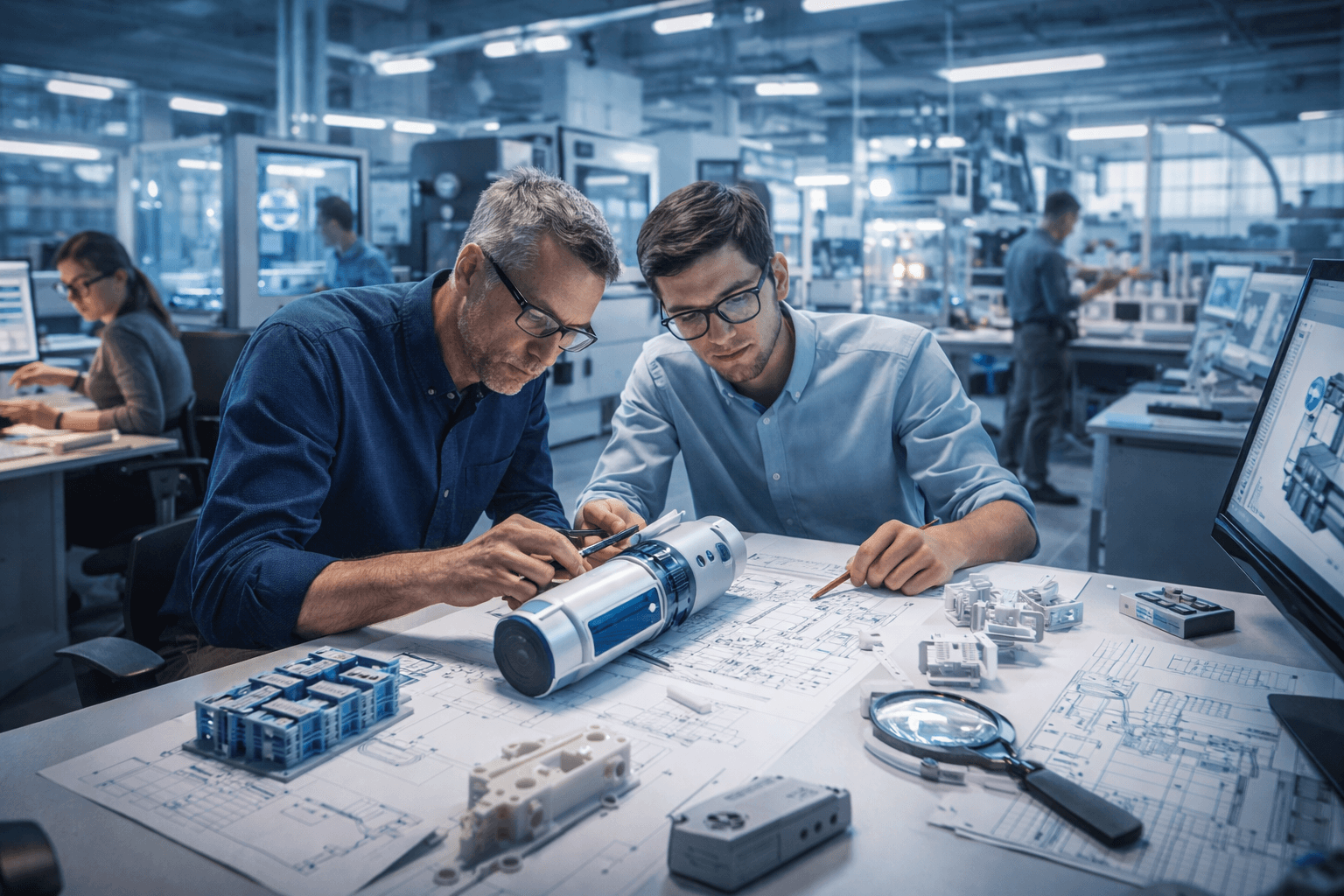
In the global manufacturing and supply ecosystem, OEM and ODM models have evolved into some of the most widely utilized approaches within the B2B sector. Especially within the Chinese market, these models are deeply rooted, offering flexible frameworks for diverse commercial operations.While many companies recognize these acronyms as mere terminology, their real-world application and strategic divergence are often poorly understood. In reality, choosing between OEM and ODM directly dictates a company's market positioning, product lifecycle strategy, and long-term trajectory. This article explores the differences, core advantages, and contextual selection criteria for both models.What is the OEM Model?The OEM (Original Equipment Manufacturer) model entails producing goods based on an established, existing design blueprint. In this arrangement, the manufacturer builds the completed product, and the client brands and markets it under their own proprietary name (often referred to as private labeling).This approach is highly advantageous for enterprises aiming for rapid market entry. Because the research, development, and tooling phases are already complete, the timeline is compressed, requiring focus primarily on packaging, compliance, and branding. While OEM minimizes upfront risk and accelerates time-to-market, customization options remain inherently restricted.What is the ODM Model?The ODM (Original Design Manufacturer) model is a more comprehensive and collaborative arrangement. Under this paradigm, the product is engineered, designed, and customized from scratch or modified heavily from a base template according to the client’s exact technical specifications and aesthetic requirements.This approach empowers companies to differentiate themselves in competitive markets. The resulting product is unique in terms of functionality, design, and internal technology. Although ODM demands higher upfront capital investment and a longer development cycle, it yields superior long-term value and brand equity.Key Differences: OEM vs. ODMProduct Design: OEM utilizes pre-designed, ready-to-manufacture templates where alterations are limited to exterior branding. ODM involves bespoke product design, prototyping, and engineering customization.Risk and Speed: OEM offers faster deployment with lower initial financial exposure. ODM requires a longer development runway but delivers proprietary product differentiation.Control and Intellectual Property: OEM clients control the brand, while the manufacturer owns the design patent. ODM arrangements often involve shared or client-held design rights depending on the contractual framework.
Read more
Chinese-manufactured industrial equipment: professional analysis of the quality and price balance
08.04.2026

Chinese-manufactured industrial equipment: professional analysis of the quality and price balance

One of the most fundamental changes occurring in the global industrial market over the past decades is the shift of manufacturing power to the East, particularly to China. If China was previously known only for cheap labor and low-priced goods, today the situation has fundamentally changed. China is no longer just a manufacturing country—it is a key player that creates technology, implements innovation, and shapes the global supply chain.For industrial and B2B companies operating in Azerbaijan, this change is of special importance. As an alternative to equipment that is not available locally or offered at high prices, the Chinese market is increasingly coming into focus. This requires making the right decision not only financially, but also strategically.When selecting Chinese-manufactured equipment, the main issue is not just price. The main issue is the proper assessment of quality, ensuring technical compliance, and effective risk management. This article aims to form a professional approach to Chinese equipment by covering precisely these three core aspects.Stages of development of Chinese manufacturingThe development of Chinese industrial manufacturing is not accidental and is the result of a long-term state strategy. To understand this development more clearly, it is important to analyze it in stages.In the first stage, China acted as a low-cost manufacturer in the global market. The main goal during this period was high-volume production and export. Quality standards were at a minimal level, and products were chosen mainly based on price. This approach led to the formation of certain stereotypes about Chinese products.In the second stage, Chinese manufacturers began cooperating with international companies. OEM manufacturing became widespread, technology transfer occurred, and production processes were modernized. At this stage, the quality of Chinese products increased significantly.At the present stage, China is a high-tech manufacturing country. Robotized factories, automated production lines, artificial intelligence, and data-driven management systems have become an integral part of Chinese industry. In many areas, Chinese companies act not only as manufacturers but also as innovators.The quality issue: What should the approach be?One of the most widespread misconceptions about Chinese equipment is that they all share the same quality. In reality, the Chinese market has a multi-level and complex structure.Different quality levels exist within the same product category, and these levels are mainly determined by price, components used, and production technology. Lower-segment products offer minimal functionality and are intended for short-term use. This type of product is more suitable for small projects or temporary solutions.Middle-segment products already meet industrial standards and have a wide application area. This equipment offers an optimal price-quality balance and is the most widely used category in the B2B market.The premium segment covers high-performance and long-lasting equipment that fully complies with international standards. In many cases, Chinese products in this category compete with European analogues.Therefore, the right approach is not a general assessment like "Chinese products are good or bad," but analyzing specific manufacturers and specific models.Main reasons for the price advantageThe price competitiveness of Chinese-manufactured equipment is the result of several fundamental factors. The most basic factor is mass production capabilities. Large-scale production reduces the cost per product, which directly affects the final price.Another important factor is state policy. The Chinese government has identified the industrial sector as a strategic priority and provided broad support to this area. Subsidies, tax exemptions, and infrastructure investments help reduce production costs.Additionally, a vast and integrated supply chain formed within China ensures the rapid and cheap acquisition of components. This makes the production process more flexible and effective.The logistics infrastructure also plays a special role. Chinese ports, railway networks, and air transport are optimized for global trade. This accelerates the export process and reduces overall costs.Comparison of Chinese and European equipmentPractical B2B projects show that choosing between Chinese and European equipment is not only a technical but also a strategic decision. European manufacturing usually offers long-term stability and high reliability. This equipment is used more in critical infrastructures and high-risk projects.Chinese manufacturing provides more flexible and economically efficient solutions. This equipment is particularly advantageous in large-scale projects, production lines, and optimization-oriented investments.The right approach is to evaluate these two directions not as alternatives, but as complementary strategies. Many companies apply a hybrid model, using European equipment for critical components and Chinese equipment for other parts.OEM and ODM manufacturing modelsOne of the biggest advantages of the Chinese market is the possibility of customizing production. The OEM model involves manufacturing under the customer's brand, creating broad opportunities for distributors.The ODM model is a more complex approach, covering all stages from product design to manufacturing. This model gives companies the opportunity to stand out in the market and offer unique products.These approaches create added value, especially for integrator companies like AGA-TEK, because it becomes possible to offer custom solutions to customers rather than standard products.

Read more