

The success of industrial projects is determined not only by ideas and investment, but also by correct technical decisions. At the center of these decisions lies equipment selection. Whether it is a manufacturing plant, an energy project, or logistics infrastructure, the equipment used directly affects the project's efficiency, profitability, and sustainability. With the growth of industrial and infrastructure projects in Russia, this issue becomes even more relevant. However, in practice, many companies evaluate equipment selection as simple procurement. Yet, this process requires multi-layered analysis, risk assessment, and long-term planning. Incorrect equipment selection does not just result in additional costs. It can cause production downtime, project delays, and even the breach of contractual obligations. For this reason, equipment selection should be treated as a strategic decision rather than a technical one.
The role of equipment selection in industrial projects Equipment acts as the "technical skeleton" of a project. The selected technology and systems determine production capacity, product quality, and operating costs. For example, choosing equipment with low efficiency may look cheaper at the initial stage, but in the long-term perspective, it causes increased energy costs and frequent technical malfunctions. On the other hand, choosing excessively high-level and expensive equipment is not always optimal either. In this case, the return on investment period can be extended. The right approach is to make a balanced choice in accordance with the specific requirements of the project.
Main risk categories Equipment selection in industrial projects covers several main risk groups. Technical risks are the most critical category. These risks include the equipment failing to provide the required performance, incompatibility with existing systems, or malfunctioning. Financial risks are related to investment and operating costs. A wrong choice leads to extra expenses and budget deviations. Logistics risks are related to delivery delays, customs problems, and supply chain disruptions. Operational risks arise during the operation of the equipment. This includes a lack of service, the unavailability of spare parts, and weak technical support.
Technical selection strategy Equipment selection in industrial projects must be carried out in a phased manner. The first step is the precise definition of the technical requirements of the project. At this stage, production capacity, operating mode, environmental conditions, and integration requirements must be taken into account. Then, alternative technologies and manufacturers are compared. Technical selection should not be limited to specifications alone. The performance of the equipment in real operating conditions, usage experience, and service capabilities must also be evaluated.
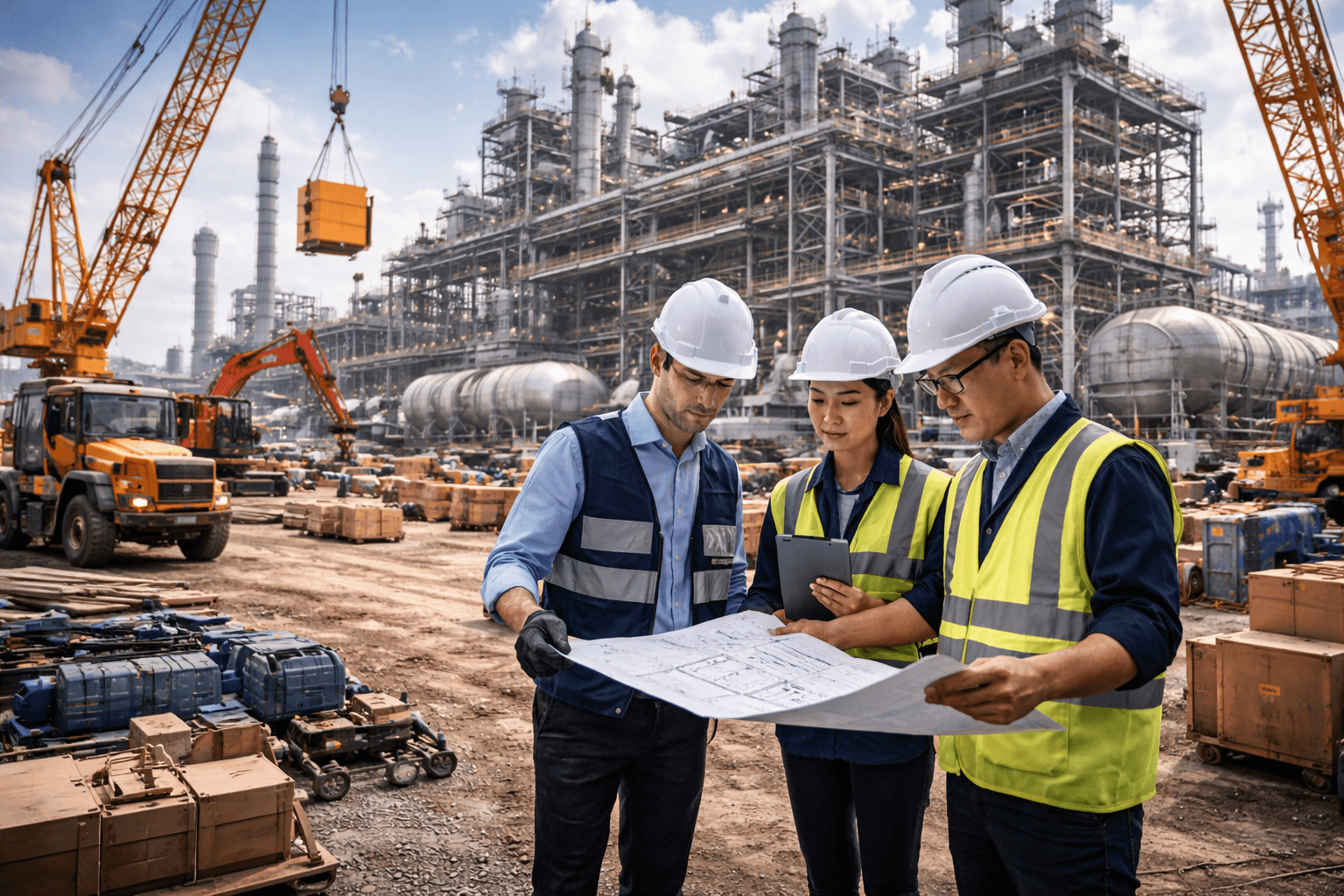
Supplier selection and strategic partnership Supplier selection in industrial projects cannot be carried out simply by price comparison. The main factors here are reliability, technical competence, and long-term cooperation potential. A reliable supplier provides support at all stages of the project — from selection to installation and service. This leads to a significant reduction in risks. The strategic partnership model yields more effective results, especially in large projects.
The China and Europe approach In practice, two main approaches are observed in industrial projects. The first is a model based entirely on European equipment. This model offers high stability and quality, but is heavier from a financial standpoint. The second approach is a combination of Chinese and European equipment. This model is more balanced and allows for the optimization of costs. The right strategy is to choose the optimal combination of these two approaches in accordance with the project's specifics.
Most common mistakes Companies often make the following mistakes. The first mistake is focusing solely on the initial price. This approach does not take long-term costs into account. The second mistake is insufficient technical analysis. This leads to the selection of unsuitable equipment. The third mistake is not taking service and technical support into account. This creates serious problems during the operation phase.
The aga-tek approach aga-tek comprehensively manages equipment selection in industrial projects. Technical analysis, risk assessment, and supply strategy are carried out within a unified system. This approach provides customers not just with a product, but with a complete project solution and minimizes risks.